
Reclaimed Oak
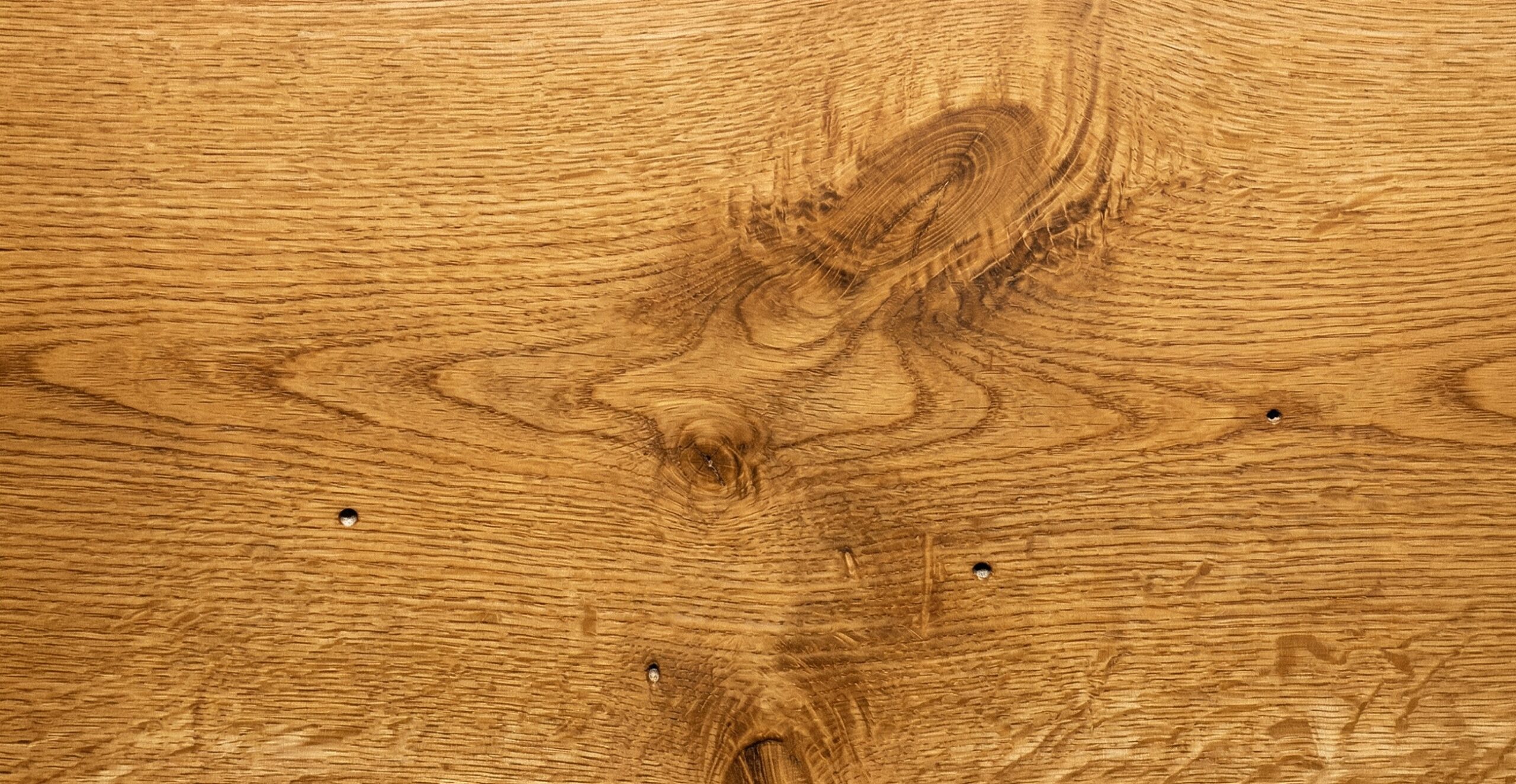
Reclaimed oak is salvaged from historic structures, including barn beams, warehouse flooring, factory timbers, and architectural elements that may be 100 to 200 years old. The character in this wood is earned, not manufactured. Nail holes, wormholes, saw marks, surface checking, and natural patina are records of the wood’s previous life. We work with reclaimed oak for projects where that visible history is the design intent, turning material that has already served one purpose into furniture that will serve another for generations.
Characteristics
Quercus spp. (reclaimed) (Fagaceae), a Reclaimed hardwood. Also known as Reclaimed oak, antique oak.
Each board of reclaimed oak carries unique markings from its prior use: oxidized nail holes darkened with age, saw marks with the characteristic curves of early mill blades, insect trails, surface checks, and deep brown patina developed from decades of exposure. The color ranges from muted tans to rich, dark browns depending on the original species, how long the wood was in service, and what conditions it endured. Old-growth reclaimed oak often shows tighter, more closely spaced growth rings than modern lumber, a visible record of slower, more patient growth in mature forests that no longer exist at commercial scale.
Indoors, reclaimed oak is used for Casework, credenzas, statement pieces, accent panels. Outdoor suitability: case-by-case. Best for pieces where the furniture should feel like it already has a history.
Performance and Strength
Reclaimed oak has structural advantages that new lumber cannot replicate. Decades or centuries of air-drying have compressed the wood’s cellular structure, increasing density and stability beyond what kiln-dried modern lumber typically achieves. The wood has already completed its natural movement cycle, so it resists warping and performs consistently in interior environments. However, working with reclaimed wood requires careful evaluation: prior exposure to chemicals, coatings, or metals (especially embedded nails and fasteners) must be assessed before milling. Old-growth reclaimed stock often tests harder than modern boards of the same species.
| Property | Value | What It Means |
|---|---|---|
| Janka hardness | 1,220+ lbf (typical) | Old-growth stock often denser than many modern boards |
| Dimensional stability | Exceptional when reconditioned | Long service history reduces future movement |
| Volumetric shrinkage | Usually low in service-ready stock | Most movement already happened before reuse |
| Surface texture | High variation | Checks, saw marks, and weathered grain change finishing behavior |
Where It Comes From
Reclaimed oak comes from structures built across the eastern United States, with much of the available supply originating from barns, warehouses, and factories in Pennsylvania, New York, Ohio, and the Midwest. The original trees were often old-growth white oak or red oak, harvested during the 19th and early 20th centuries when first-growth forests were still being cleared for agriculture and industry. We source through reputable salvage suppliers who document provenance and handle the initial de-construction process.
Typical harvest age: The original harvest age of reclaimed wood is rarely documented, but the trees were typically old-growth, meaning they may have been 100 to 200 years old when first harvested. The time-in-service adds another 80 to 150 years. This combination of tree age and service life gives reclaimed oak a material history that new wood simply cannot offer.
Reclaimed oak is an inherently sustainable material. No new trees are harvested, and repurposing old structural timber keeps it out of landfills while preserving the embodied energy and carbon already stored in the wood. We source through reputable salvage suppliers who document provenance and handle de-construction responsibly.
Cutting and Drying
Milling reclaimed oak requires metal detection and careful de-nailing before any saw blade touches the wood. Embedded nails, screws, and fasteners are the primary hazard, and missing even one can damage tooling and create safety risks. After metal removal, the wood is evaluated for structural soundness, surface contamination from old coatings, and moisture content. Even well-seasoned reclaimed stock often benefits from kiln sterilization to eliminate any insect activity. Acclimation in the workshop environment is standard before final dimensioning and joinery.
Recommended Finishes
- Hardwax oil: Tactile, patina-forward surfaces. Refreshable.
- Water-based clear: More protective where cleaning is frequent.
- Lacquer: Protective film for frequent-use surfaces.
- Grain fillers: For smooth high-sheen on open-pored oak.
- Resin/epoxy fills: For voids and nail holes if a flatter surface is desired.
Reclaimed wood finishing starts with evaluation. Old coatings, waxes, oils, or chemical treatments from the wood’s prior life can interfere with adhesion and curing of new finishes. Always test on a sample area first. Surface character can be preserved or reduced depending on how much the wood is planed: light surfacing preserves the original patina, saw marks, and aged color, while deeper milling reveals fresher wood underneath. For nail holes and voids, resin or epoxy fills create a level surface, or the holes can be left open as part of the character.
Browse all options in our finishes guide.
Care and Maintenance
Daily Care
- Dust with a soft, dry cloth or microfiber.
- For routine cleaning, use a slightly damp cloth, then wipe dry.
- Avoid abrasive sponges and harsh chemical cleaners, especially ammonia-based or silicone-containing products.
- Wipe spills promptly. Use coasters and trivets for heat and water protection.
Environment
- Maintain indoor humidity around 40 to 60 percent to reduce seasonal movement in solid wood.
- Avoid placing the piece near heating vents, fireplaces, or prolonged direct sunlight.
Maintenance Schedule
- Oil-finished surfaces: Refresh (clean, lightly abrade if needed, reapply oil) once or twice per year depending on use.
- Film-finished surfaces (water-based clear, polyurethane, lacquer): Clean gently. Refinish generally only after visible wear or damage.
Repair
- Oil systems: Minor scratches can often be blended by light sanding and re-oiling.
- Film systems: Small scratches may be spot-repaired. Deeper damage may require sanding and refinishing the affected area.
Outdoor Furniture
- Outdoor exposure increases stress on finishes.
- If maintaining original color: plan periodic UV-protective oiling (often annually). Otherwise, allow natural silvering and focus on cleaning and inspection.
- Avoid pressure washing. High-pressure water can erode surface fibers, increase splintering, and shorten finish life.
For more details, see our care and maintenance FAQ.
Related Wood Species
White Oak
White oak is one of the most versatile hardwoods we work with and a staple in both residential and commercial projects.
Red Oak
Red oak is a bold, expressive hardwood with strong open-grained figure and one of the best stain-accepting properties of any domestic species.
Ash
Ash is a mainstream furniture hardwood with open pores, strong grain definition, and exceptional shock resistance.
Browse All Wood Species
Compare 21 species by appearance, durability, and best applications.
Start Your Project
Tell us about your space and we will help you choose the right materials.