
Parota (Guanacaste)
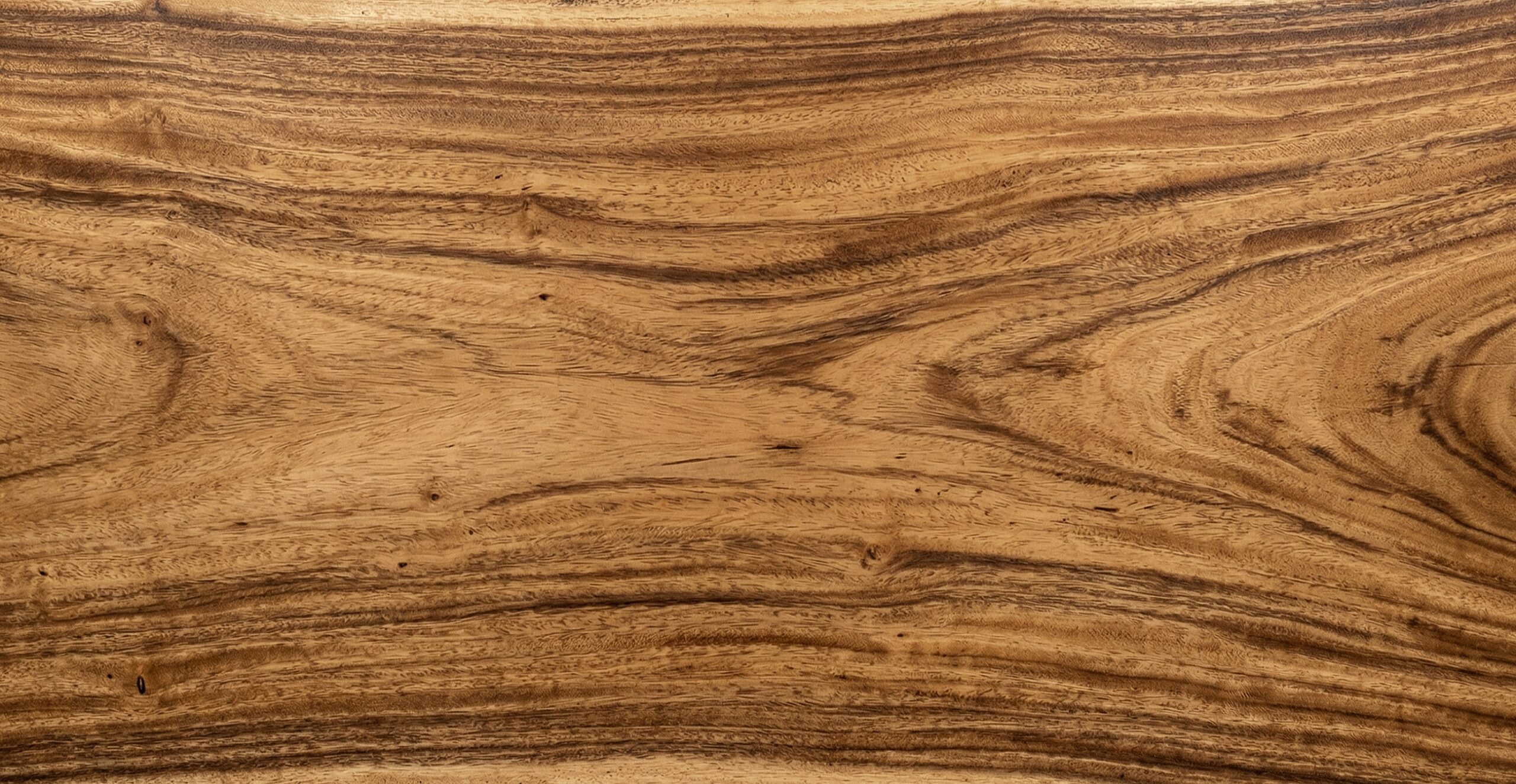
Parota is a tropical slab wood known for wide surfaces, dramatic streaking, and a relaxed organic presence. Its low density relative to other tropical hardwoods makes very large slabs manageable in weight, with trunk diameters reaching 5 to 8 feet. SENTIENT uses parota for oversized dining and conference tables where bold figure and scale matter.
Characteristics
Enterolobium cyclocarpum (Fabaceae (legume family)), a Hardwood (angiosperm). Also known as Parota, Guanacaste.
Heartwood ranges from light to medium brown, sometimes carrying a reddish hue, with darker streaks of brown running through the surface. The sapwood is pale yellow and clearly separated from the heartwood. Grain is usually slightly interlocked with a very coarse texture and moderate natural luster. Wide slabs show dramatic color variation across the surface, and the large pores give parota a distinctive, almost fibrous look that sets it apart from finer-textured hardwoods.
Indoors, parota (guanacaste) is used for large dining and conference tables, statement surfaces, and furniture frames where visual drama and manageable weight are priorities. Outdoor suitability: moderate outdoor capability on a project-specific basis, with durable to very durable heartwood offering reasonable weather resistance. wide slabs with dramatic streaking for oversized tables, chosen when clients want bold visual impact at a lighter weight than walnut or other dense species.
Performance and Strength
Parota is easy to work with both hand and machine tools, though tearout during planing is common and quartersawn surfaces can come out fuzzy after machining. The wood glues and finishes well despite the occasional interlocked grain. With a Janka hardness of just 470 lbf and a specific gravity of 0.34, parota is mechanically soft for a tropical species. Long table spans should account for a modulus of rupture of 8,640 lbf per square inch, which means concealed support may be necessary on oversized dining or conference tables.
| Property | Value | What It Means |
|---|---|---|
| Janka hardness | 470 lbf | Very soft for a tropical slab species; easy to dent |
| Specific gravity | 0.34 | Light enough that very large slabs remain workable |
| Volumetric shrinkage | 7.1% | Good dimensional stability once dried correctly |
| Modulus of rupture | 8,640 lbf/in² | Lower bending strength; long spans may need support |
Where It Comes From
Parota grows across tropical America, with its primary range spanning Mexico, Central America, and northern South America. Guanacaste is the national tree of Costa Rica. The species produces massive trunks, commonly 5 to 8 feet in diameter, which is why it yields the oversized slabs the trade values. We source parota through reputable international dealers who can verify origin and legality.
Typical harvest age: Parota is a fast-growing tropical tree that reaches harvestable size within a few decades on productive sites. The species is not listed in CITES or on the IUCN Red List of Threatened Species.
We source parota through reputable and responsible international dealers. The species is not CITES-listed and availability remains consistent in the tropical hardwood market.
Cutting and Drying
Parota is sawn primarily into slab and tabletop formats that showcase the tree’s massive trunk diameter. The low density makes large slabs lighter and more manageable than equivalent-size slabs in denser tropical species. For slab pieces, we follow our standard drying protocol: air-dried up to 18 months, then kiln-dried for 3 months to bring moisture content to stable levels and prevent warping in service.
Recommended Finishes
- Hardwax oil: Emphasizes grain and warmth. Refreshable.
- Water-based clear: Protective indoor film.
- Lacquer: Polished protective film.
- Stains: If color matching is required.
Standard surface preparation applies, but parota’s coarse texture and large pores mean grain filling may be necessary for smooth, high-sheen finishes. Hardwax oil emphasizes the natural grain and warmth while remaining refreshable over time. Water-based and lacquer finishes provide protective film for indoor use. If color matching is required, follow stain penetration rules carefully and test on scrap first, as the interlocked grain can absorb unevenly.
Browse all options in our finishes guide.
Care and Maintenance
Daily Care
- Dust with a soft, dry cloth or microfiber.
- For routine cleaning, use a slightly damp cloth, then wipe dry.
- Avoid abrasive sponges and harsh chemical cleaners, especially ammonia-based or silicone-containing products.
- Wipe spills promptly. Use coasters and trivets for heat and water protection.
Environment
- Maintain indoor humidity around 40 to 60 percent to reduce seasonal movement in solid wood.
- Avoid placing the piece near heating vents, fireplaces, or prolonged direct sunlight.
Maintenance Schedule
- Oil-finished surfaces: Refresh (clean, lightly abrade if needed, reapply oil) once or twice per year depending on use.
- Film-finished surfaces (water-based clear, polyurethane, lacquer): Clean gently. Refinish generally only after visible wear or damage.
Repair
- Oil systems: Minor scratches can often be blended by light sanding and re-oiling.
- Film systems: Small scratches may be spot-repaired. Deeper damage may require sanding and refinishing the affected area.
Outdoor Furniture
- Outdoor exposure increases stress on finishes.
- If maintaining original color: plan periodic UV-protective oiling (often annually). Otherwise, allow natural silvering and focus on cleaning and inspection.
- Avoid pressure washing. High-pressure water can erode surface fibers, increase splintering, and shorten finish life.
For more details, see our care and maintenance FAQ.
Sources
- CIRAD Tropix: Guanacaste technical properties
Related Wood Species
American Black Walnut
Black walnut is SENTIENT’s signature material and our most requested species for dining tables and live edge work.
Claro Walnut
Claro walnut is a West Coast walnut prized for dramatic figure and color variation that goes far beyond what American black walnut typically offers.
Teak
Teak is the gold standard for outdoor furniture wood, and it has been for over 2,000 years.
Tigerwood
Tigerwood is a trade name used for multiple tropical species, with the most commonly traded in the Americas being Goncalo Alves (Astronium graveolens).
Browse All Wood Species
Compare 21 species by appearance, durability, and best applications.
Start Your Project
Tell us about your space and we will help you choose the right materials.